
Contributed by Wesley Chen, Shinnyo-en USA Head Temple and Leticia Ruiz, Shinnyo-en Hawaii Temple
From June 22nd to June 27th, ten students from various faith traditions arrived in New Mexico and were immersed in an interfaith journey of learning and self-discovery. This year’s participants represented Shinnyo Buddhism, Zoroastrianism, Catholicism, and Presbyterianism. They were guided through the different sites by chaperones with backgrounds in Catholicism, Islam, the Church of Jesus Christ of Latter-day Saints, and Shinnyo Buddhism. Together, we visited numerous houses of worship, sacred spaces, and heritage sites.
June 22nd – Travel Day
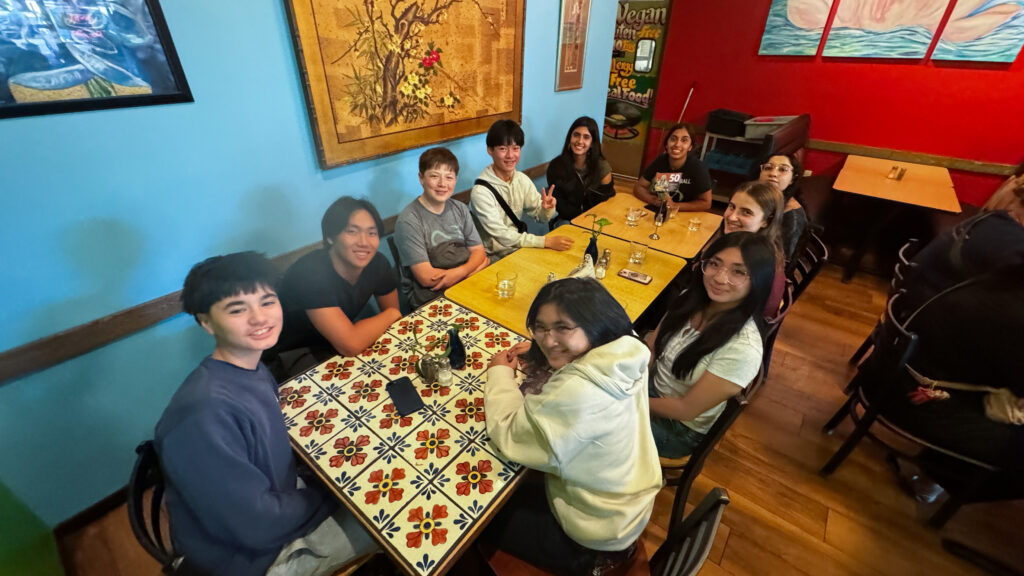
We flew from different locations: one group from San Jose, a second from Los Angeles, another from Orange County, and one student from West Virginia. After getting to know each other during dinner at Annapurna’s Café, we had a short orientation to introduce the purpose of the trip and for the chaperones to share about their faith traditions. This demonstrated what was expected from the student presentations that would be given throughout the week.
June 23rd – Santa Fe
To help the students deepen their experiences, we began each day with a grounding exercise. The students were given a set of words to keep in mind and reflect on during our visits. For our day in Santa Fe, the students were asked to reflect on their five senses: sight, sound, scent, taste, and touch.
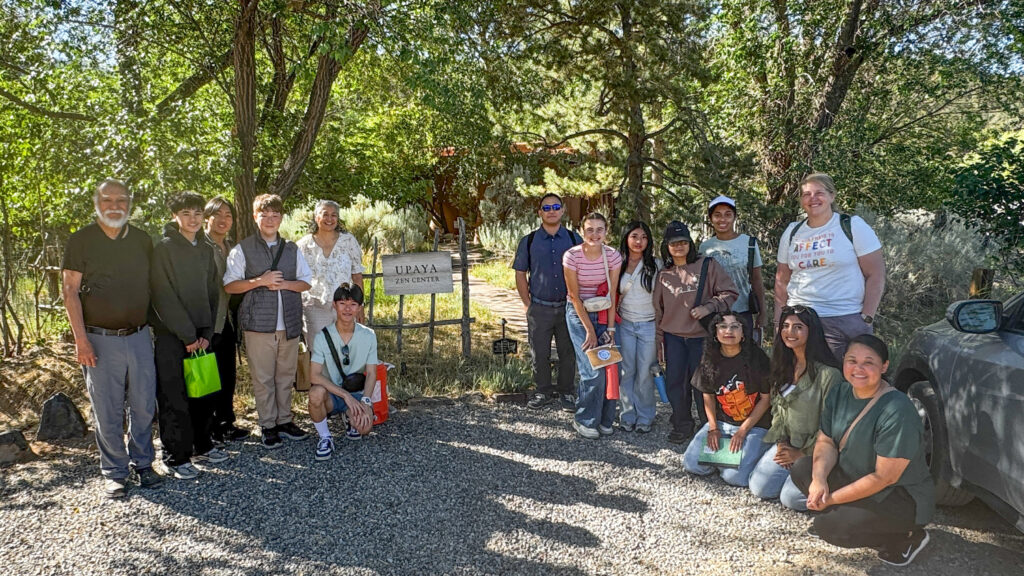
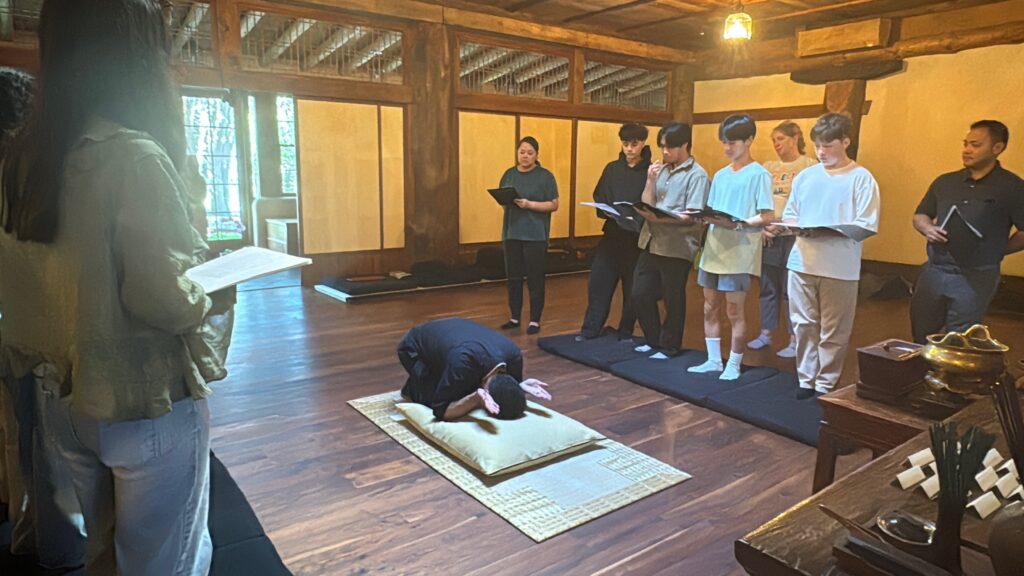
We began our day at the Upaya Zen Center, a Buddhist monastery. Sensei Noah Kodo Roen, director of the center, took us on a tour of the facilities and gave us an inside look of the campus. The beautiful garden and abundant greenery surrounding the monastery added to the serenity of the sacred spaces. Sensei Noah guided us through both sitting and walking meditations. He also led us in chanting and explained how services are held.
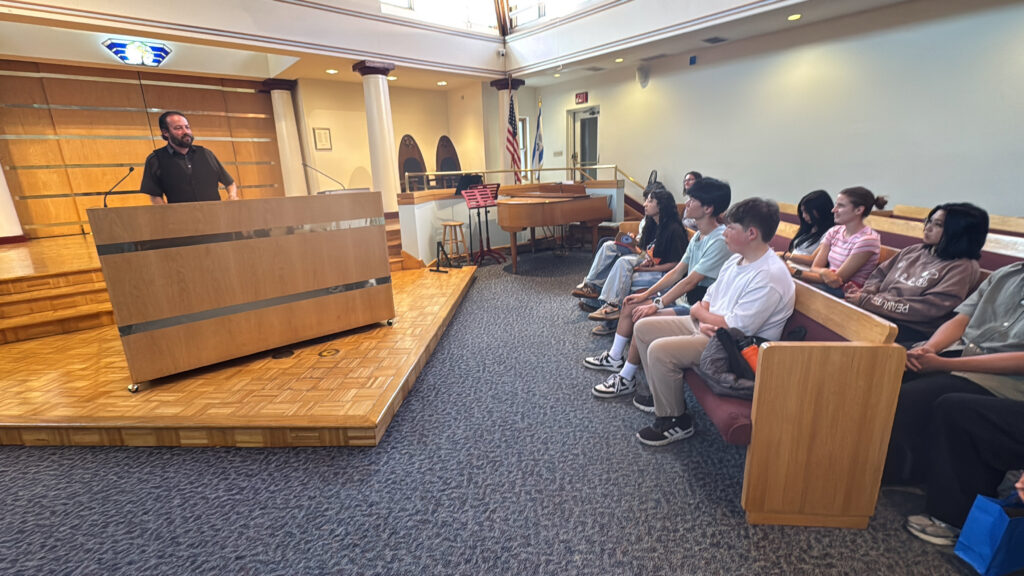
The day continued with a visit to Temple Beth Shalom (TBS), the oldest and largest Jewish synagogue in Santa Fe. Rabbi Neil Amswych gave energetic and entertaining talks about not only the history of the TBS community and structures, but also about the importance of and his efforts towards interfaith dialogue.
The last destination for the day was a visit to the Cathedral Basilica of St. Francis of Assisi, where the students learned about how the Catholic faith was brought to the state by Franciscan priests during the 1500s. The cathedral is now home to many historical sculptures and paintings that were brought from different parts of the world.
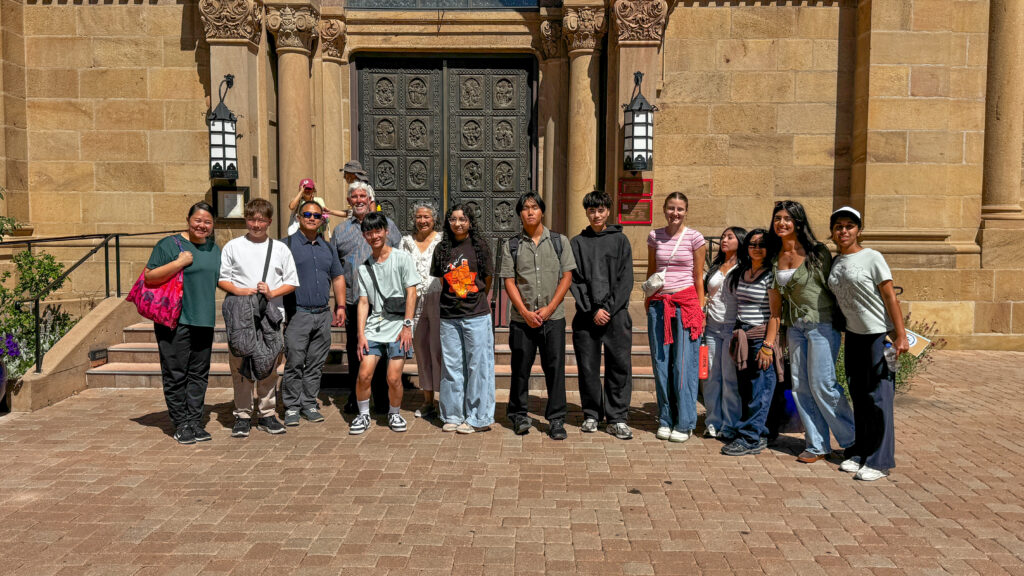
June 24th – Taos
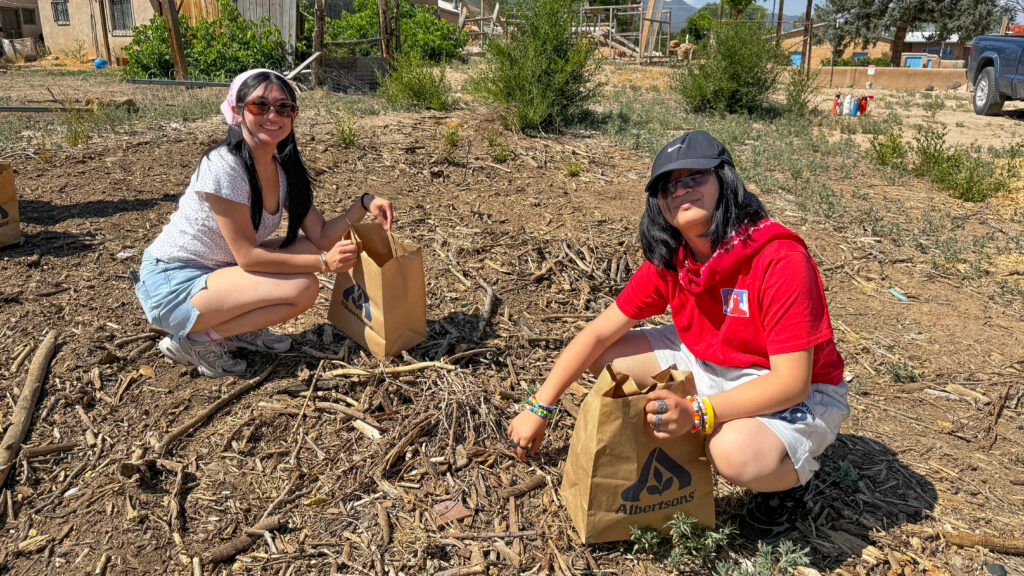
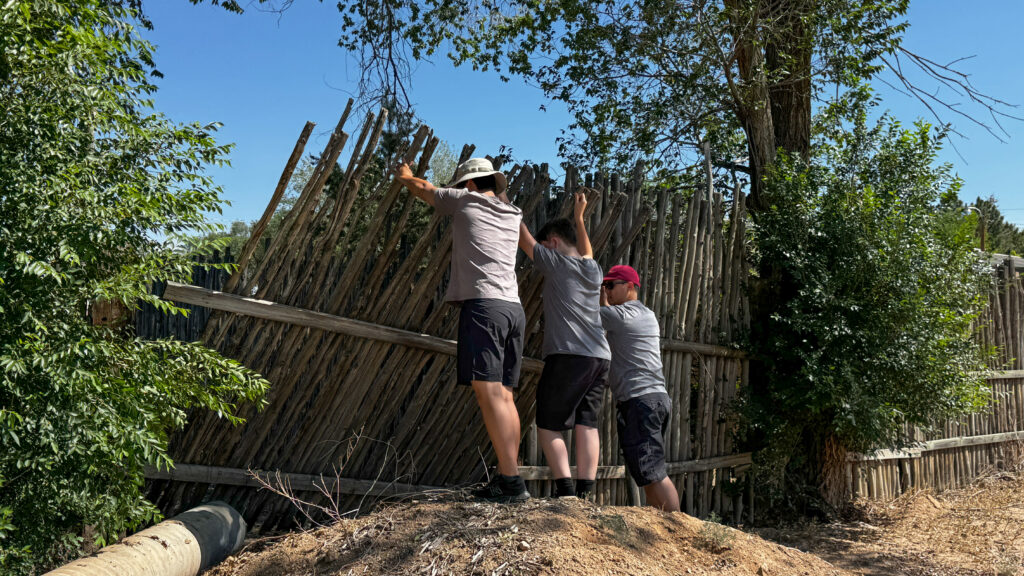
For our second day of visits, the students were encouraged to focus on acts of service, as well as continue building on their observations through their five senses. In the morning, we arrived at the San Francisco De Asís Catholic Mission Church to offer our service to the community. Some students helped with packing wood chips for the elderly members of the parish to use as fire kindling during the winter months. Others helped clean the church grounds by pulling weeds and picking up trash.
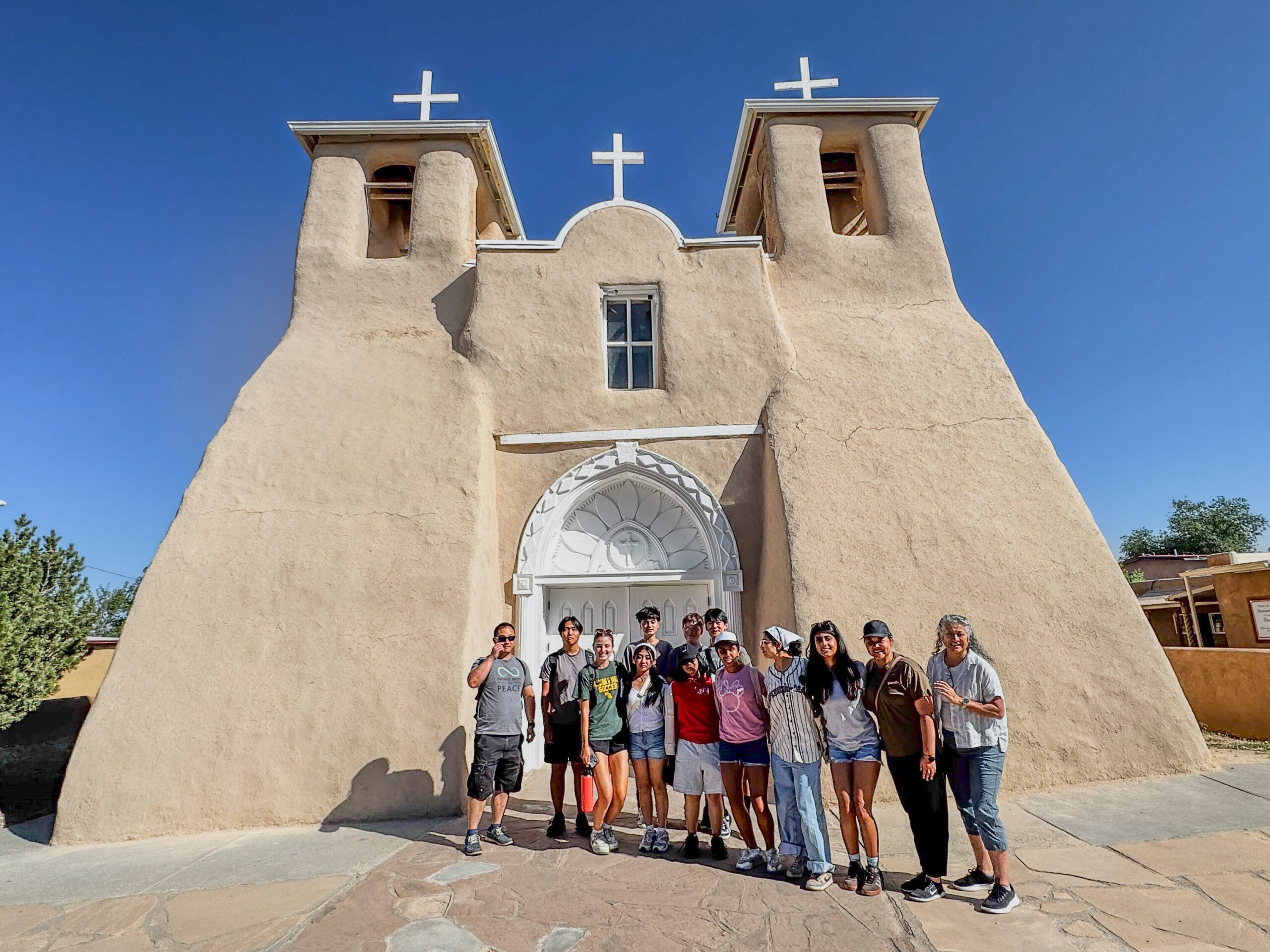
After spending the morning offering community service, we visited the Taos Pueblo and observed their traditional corn dance. The atmosphere was very solemn and mysterious, as no information about the ritual was given to the visitors. Photography and video recordings were strictly prohibited, so we stayed in the moment and observed as the elders chanted and dancers moved in two lines in front of the church. Later, we learned that each pueblo community had feast days to honor their patron saint from the Catholic Church, but the Native American spiritual and cultural practices were incorporated. Our visit to Taos coincided with the feast day for San Juan, and the people of Taos performed the corn dance rituals to express gratitude for the harvest.
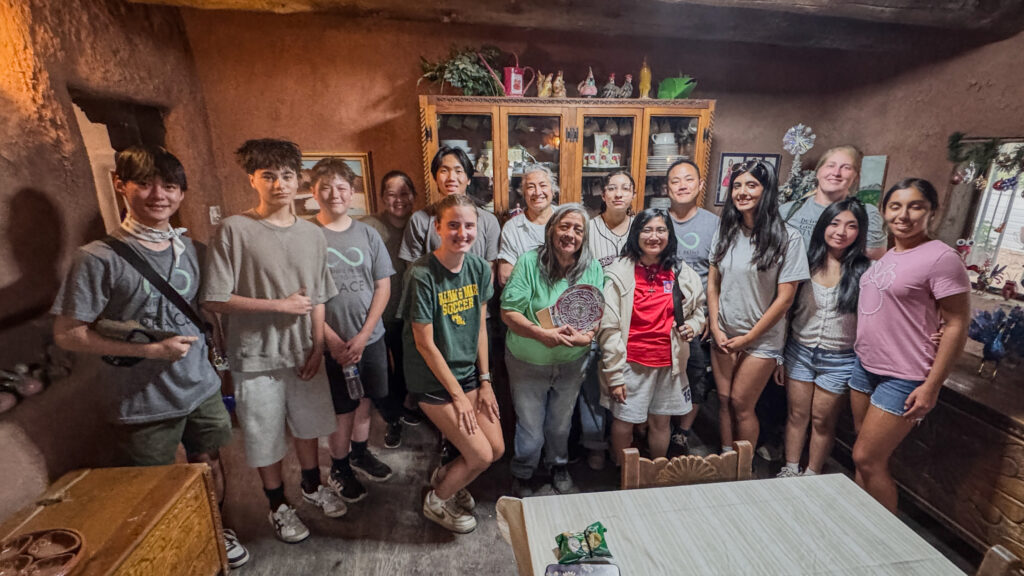
To round out our visit to Taos, we made a stop to see the Rio Grande Gorge, then returned to the Mission Church where we were welcomed to the home of Guadalupe (parish historian) for a nice home-cooked barbecue dinner. The students enjoyed exploring and learning more about life in a traditional adobe brick house.
June 25th – Los Alamos, Chimayo, Santa Clara
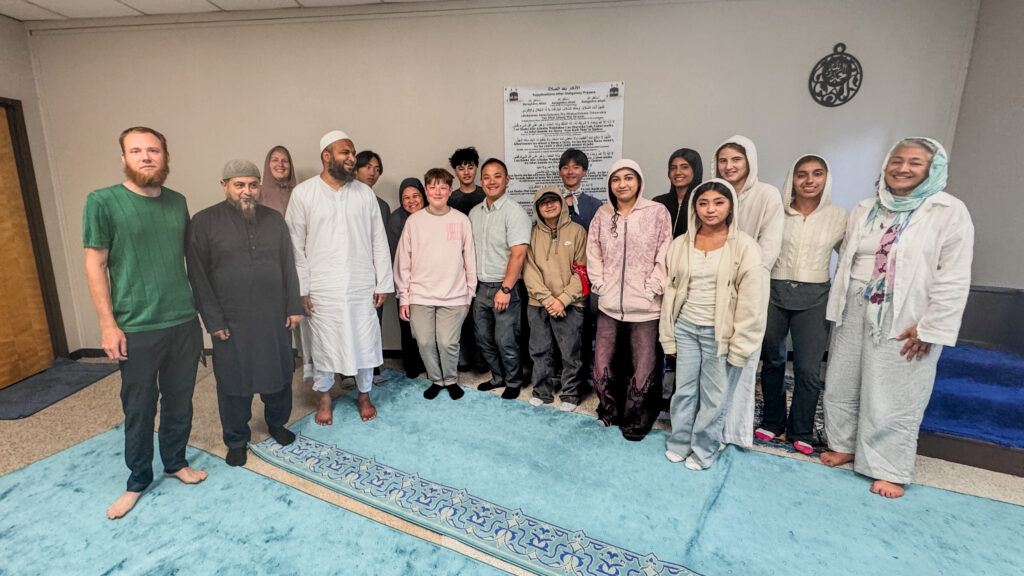
The focus word for this day was hospitality. The first house of worship we visited was the Masjid Ibrahim, a Muslim mosque located in Los Alamos. Although this space was quite small, the hosts extended great hospitality during our visit. We were lucky enough that an imam (prayer leader) and a few members of his congregation were on a propagation trip from Texas to the area. Imam Hussein introduced the teachings of Islam and their beliefs in a very open and approachable way. The visit ended with a nice treat of donuts and juice that was prepared for us by the members.
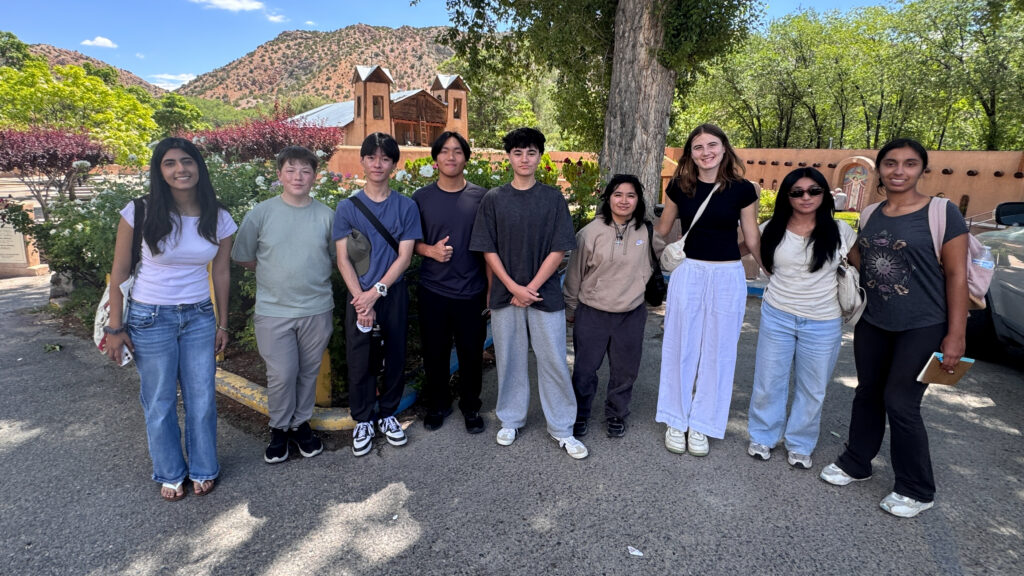
Afterwards, we visited the Santuario de Chimayó, a Catholic shrine and internationally known pilgrimage site. The large hill once had hot springs that were considered sacred and had healing properties. After the Spanish settled into the area, a six-foot tall crucifix was discovered buried at the foot of the hill. A church was built at the location of the discovery and to this day pilgrims from around the world visit the site, pray for healing, and return home with the holy dirt.
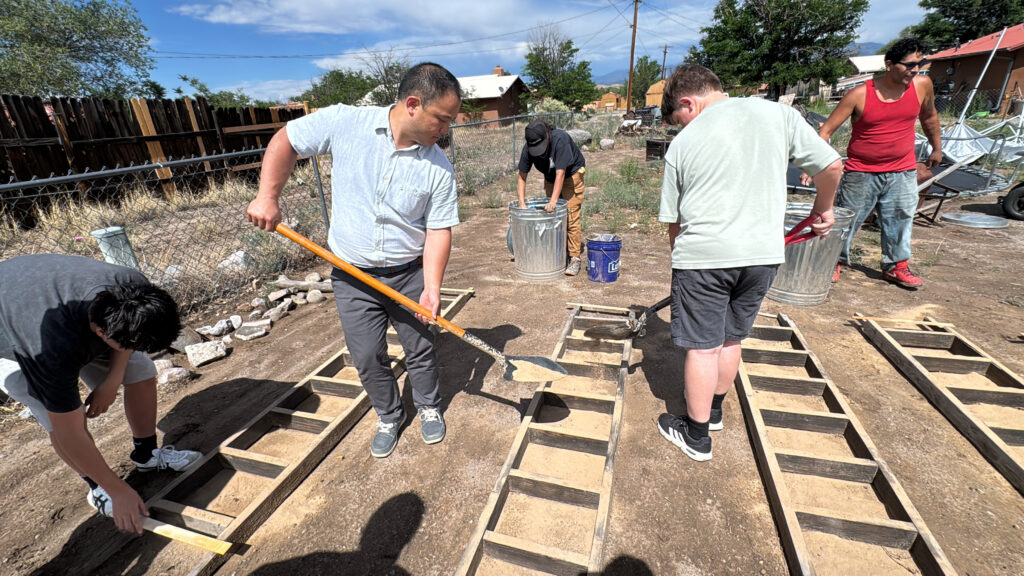
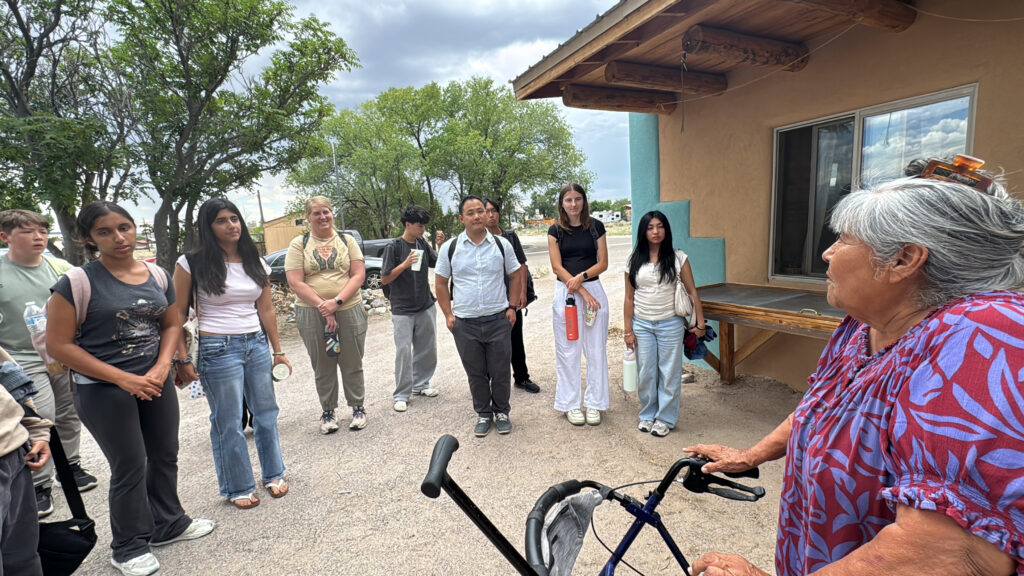
Lastly, we had a very amazing and special opportunity to visit with Marian Naranjo, an elder from the Santa Clara Pueblo. Marian invited us into her family home and their sacred Women’s Prayer House. This space had a very calm and mystical, but also welcoming atmosphere. While Marian was sharing about the culture and history of her pueblo and the Prayer House, the Adobe structure unexpectedly became a protective shelter for all of us as the sky opened up and a hail storm suddenly raged outside. Fortunately, the storm went away as quickly as it showed up. We were able to still make adobe bricks in their backyard and enjoy a delicious, homemade dinner of Frito pies afterwards.
June 26th – Acoma, Albuquerque
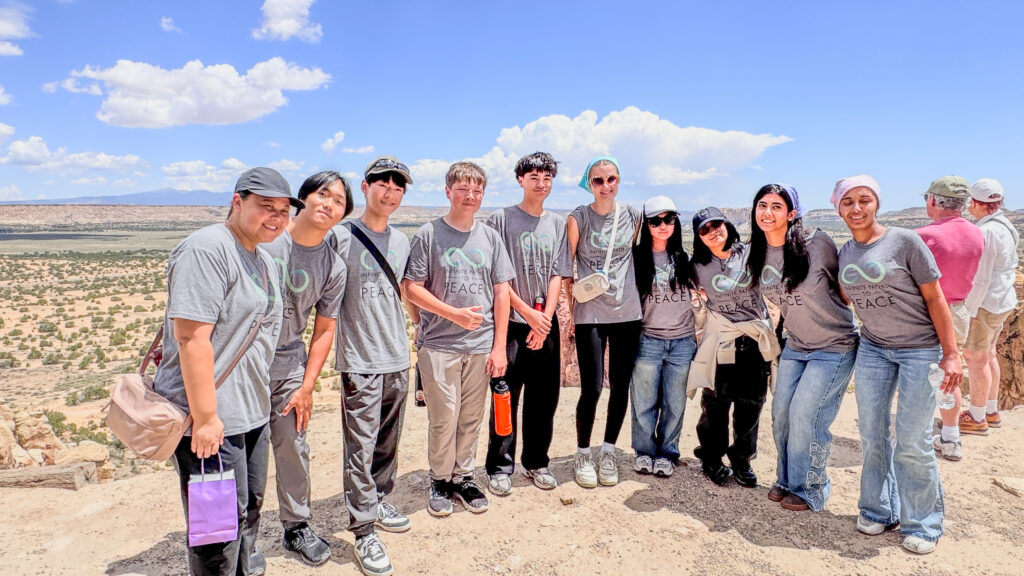
On the last day of the trip, we visited Acoma Pueblo, also known as “Sky City.” This pueblo is built on a mesa, over three hundred feet above ground. We were given an amazing tour of the pueblo, learning about the perseverance of the Acoma people: not only how they survived for thousands of years on top of mesas, but also how they protected their beliefs and culture despite being occupied by Spanish priests and soldiers.
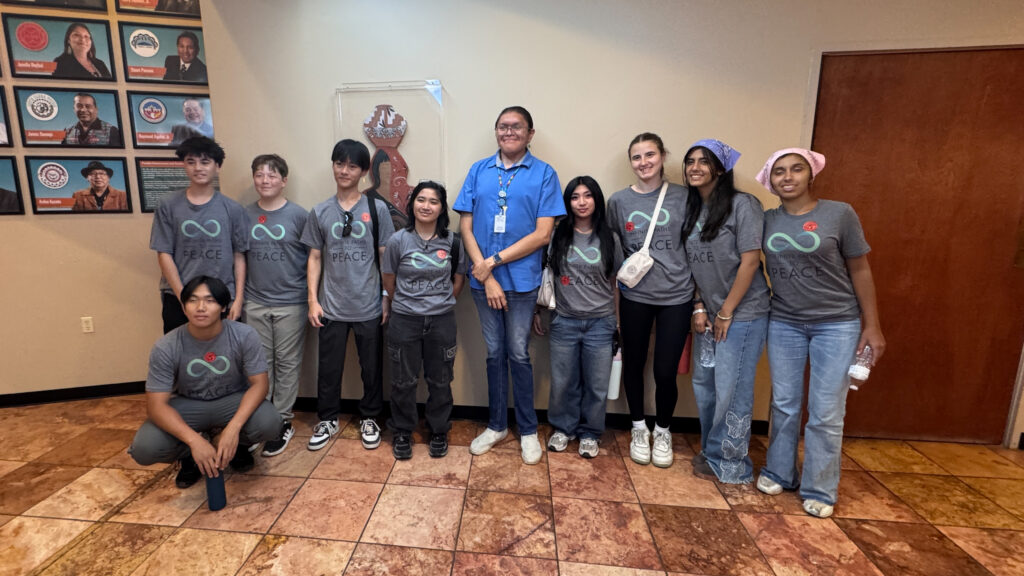
Our final visit was to the Indian Pueblo Cultural Center, where we heard an overview of all nineteen pueblo communities in New Mexico. The museum exhibit showcased the origin stories, languages, and cultural practices of the pueblo people. Through interactive displays, the students were able to demonstrate what they learned during their week in New Mexico. All of the pieces of their experiences came into perspective.
During our final reflections, many students shared that this was the first time that they represented and shared about their own faith traditions. At first, they were unsure of what they could offer but through the site visits, group discussions, and community building, they found the confidence and peace of mind to open up and share. The students expressed a wish to continue learning and nurturing their own faith as well as continuing to be open-minded towards all cultures and belief systems.
The Shinnyo-en Foundation Interfaith Immersion trip is much more than a historical tour of New Mexico’s sacred spaces; it has become a transformative journey of the heart and mind. By engaging their senses, practicing community service, and experiencing deep hospitality across diverse traditions, these ten students transformed from individual travelers into a cohesive interfaith community. They left New Mexico not only with a profound respect for the rich spiritual tapestry of others, but also with a renewed confidence in their own unique voices. As they return to their respective corners of the country, they carry forward a shared commitment to open-mindedness, mutual respect, and a lifelong dedication to walking in faith alongside one another.
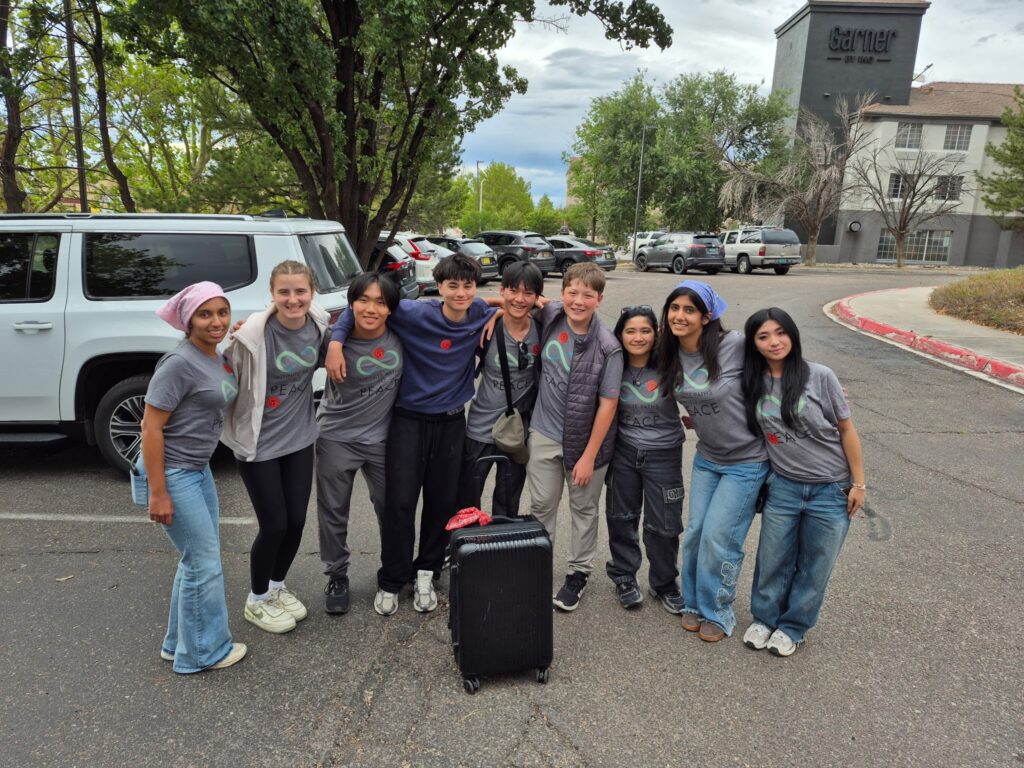
Please enjoy additional photographs and videos from the New Mexico Interfaith Immersion Trip, generously shared by Deacon Steve Herrera, the overall trip leader and coordinator. The photographs are available at this link, and the video can be viewed at this link.